Name:HUANG Wei
Tell:
Email:huangwei0519@wbgcas.cn
Organization: Wuhan Botanical Garde
Nutrient Variability Drives Soil Fungal Legacies to Mediate Invasive Plants
2026-03-26
Invasive plants pose a significant threat to ecosystems worldwide, and their spread is often linked to changing nutrient levels due to climate change and human activity. While it's known that more nutrients can directly help invaders, scientists are increasingly recognizing that these changes also impact soil microbes, creating long-lasting 'soil legacy effects' that influence future plant growth. The precise way these legacies influence invasive plants, however, has been a mystery.
The Invasion Ecology Research Group at the Wuhan Botanical Garden, Chinese Academy of Sciences, conducted a two-phase greenhouse experiment to systematically investigate how historical nutrient conditions shape soil fungal communities and how these changes subsequently affect the growth of non-native plants.
The results showed that nutrient level (high vs. low) and nutrient fluctuation (constant vs. pulsed) interacted significantly to influence soil fungal communities, producing distinct fungal legacy effects that subsequently altered non-native plant performance.
Under low nutrients, pulsed nutrient addition produced fungal legacies that significantly hindered the growth of invasive plants compared with constant additions. In contrast, under high nutrients, the legacy effects did not differ between the two nutrient addition regimes. Further analyses revealed a positive correlation between invasive plant growth and the relative abundance and richness of arbuscular mycorrhizal fungi (AMF) in soils from the first phase, whereas no significant relationship was detected with indicators of fungal pathogens.
These findings highlight the importance of considering historical resource conditions and the soil legacy effects when predicting invasion risks under global change. The study provides new insights into the mechanisms underlying non-native plant invasions and offers a valuable scientific basis for ecological management strategies that incorporate soil processes, particularly for invasion risk assessment and prevention in nutrient-poor ecosystems.
Result entitled "Interactions between nutrient levels and fluctuations shape soil fungal legacies and mediate non‐native plant growth" was published in Journal of Ecology. QIN Wenchao is the first author, and HUANG Wei is the corresponding author. This work was supported by the National Key Research and Development Program of China and the National Natural Science Foundation of China.
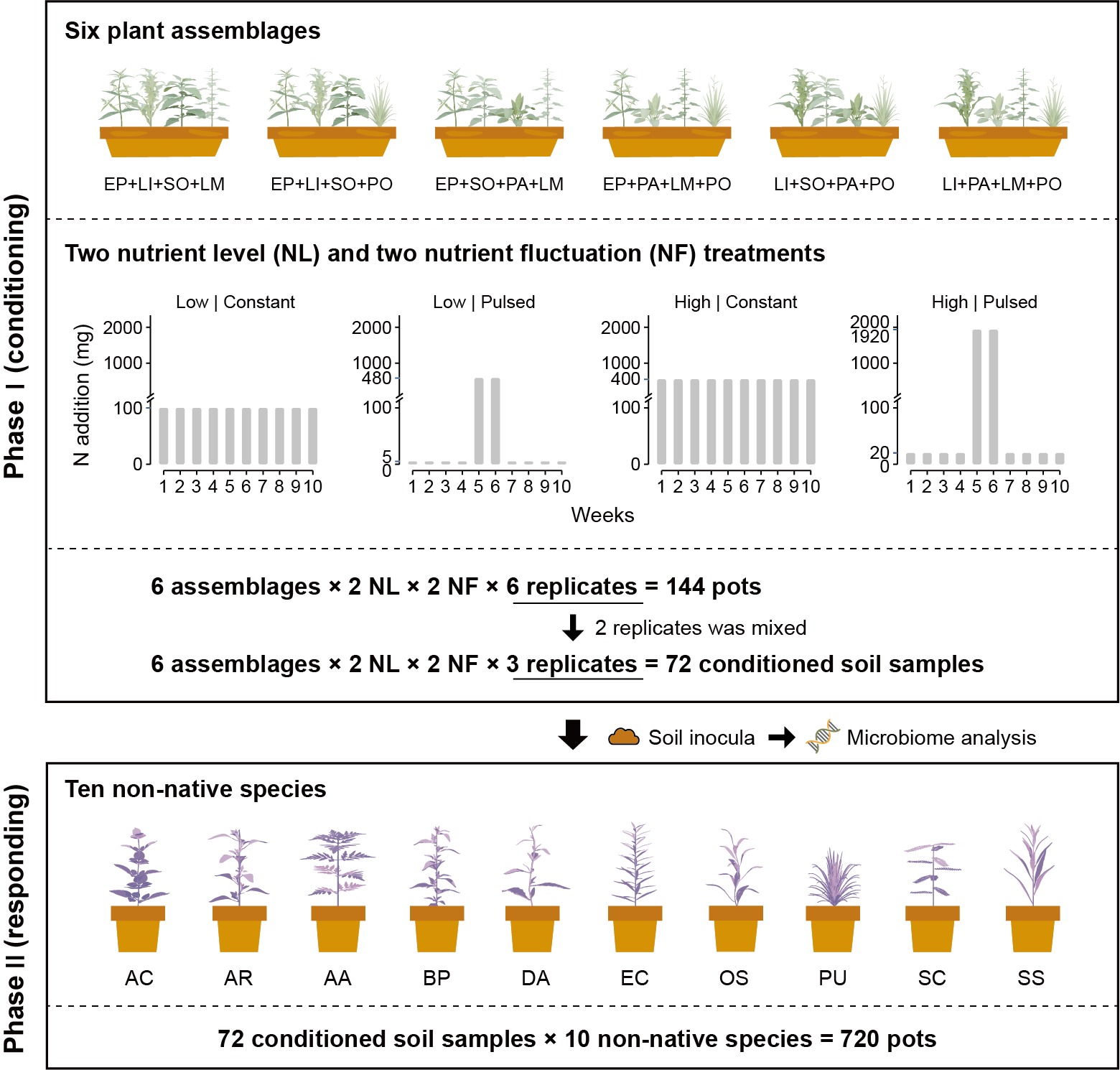
FIGURE 1 Schematic illustration of the experiment design (Image by WBG)
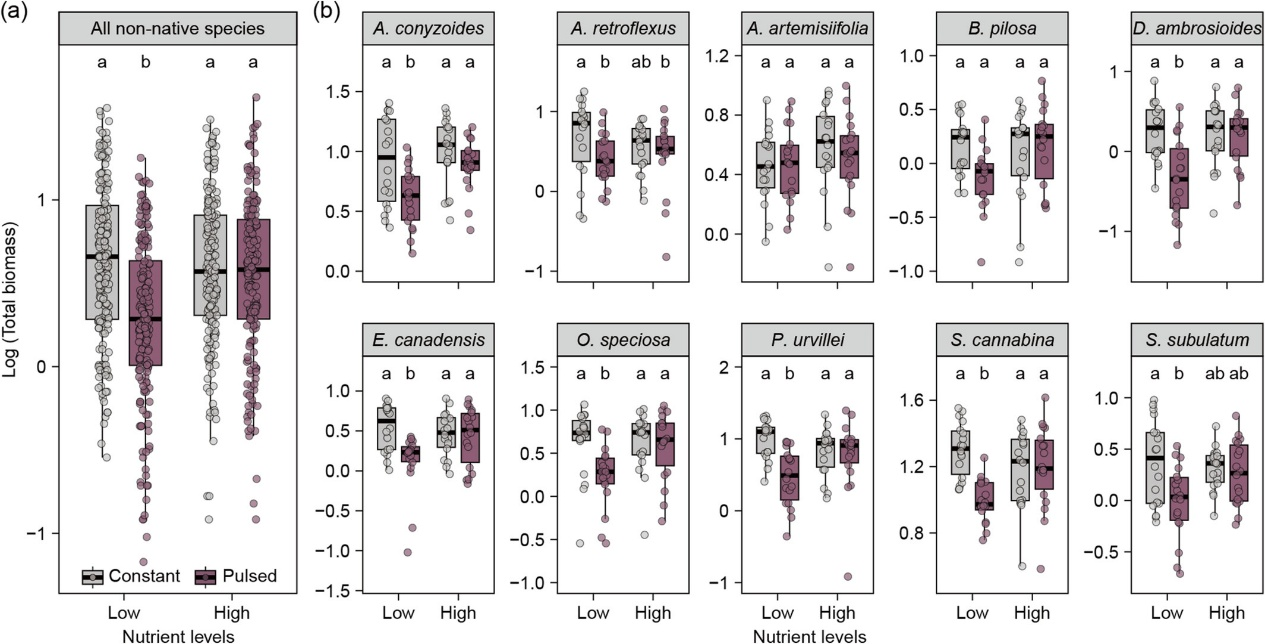
FIGURE 2 Effects of soil fungal legacies generated by different combinations of nutrient levels (low or high), nutrient fluctuations (constant or pulsed) in phase I on growth of non-native species in phase II (Image by WBG)